In this guide
Good resume bullets are specific enough to discuss in an interview and honest enough to defend. Numbers can help, but invented percentages are worse than no metric at all. Evidence can also come from scope, frequency, constraints, ownership, and a clearly described result.
The short version
- Start from a real event, not an action-verb template.
- Use counts, ranges, frequency, scope, time, or quality signals you can explain.
- When no number is defensible, make the change and its consequence concrete.
A responsibility is not yet evidence
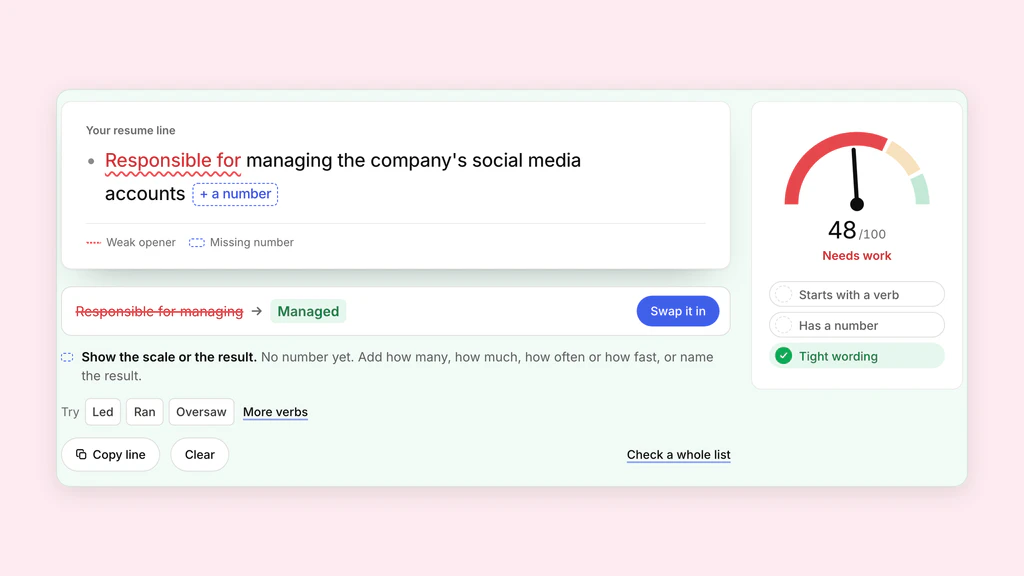
“Responsible for customer support” describes an assignment. It does not show what you handled, how you worked, or what changed because of your contribution.
A stronger bullet adds observable detail: “Resolved billing and account-access requests across email and live chat, documenting recurring issues for the product team.” This version still avoids an unsupported metric, but it gives the reader channels, issue types, and an outcome.
Build an evidence inventory before writing
Memory is more reliable when prompted by concrete categories. For each role, list projects, recurring work, difficult incidents, improvements, handoffs, and decisions you owned. Then look for records that can refresh your memory: calendars, tickets, dashboards, release notes, project plans, and performance reviews.
- Scope: customers, teammates, locations, products, accounts, or systems affected.
- Frequency: requests per day, releases per month, reports per quarter, or meetings per week.
- Time: turnaround, delivery window, migration duration, or hours saved.
- Quality: error reduction, fewer escalations, reliability, compliance, or review outcomes.
- Complexity: integrations, stakeholders, constraints, data volume, or competing priorities.
Use the strongest defensible level of precision
Exact numbers are useful when a source supports them. If you know the help desk averaged 42 tickets a day, use 42. If the volume varied, an honest range such as 30–50 may be more accurate. If records are unavailable, use a conservative qualifier only when you can explain its basis.
Do not reverse-engineer a percentage because it sounds impressive. “Cut processing time 63%” invites a simple interview question: from what baseline to what result? If you cannot answer, rewrite it.
- Exact: “Reconciled 120 monthly invoices across four cost centers.”
- Range: “Supported 15–20 active client accounts.”
- Frequency: “Published two product education emails each week.”
- Scope without a number: “Owned the handoff between support, billing, and engineering.”
- Concrete result without a metric: “Replaced a manual approval chain with a documented intake workflow.”
Write the bullet as action, object, and evidence
A practical structure is: what you changed, what you changed it for, and the evidence that makes the claim concrete. The evidence can be a result, scale, constraint, or method.
For example, “Built an onboarding checklist for new support hires, consolidating scattered procedures into one reviewed workflow.” The action is built, the object is the checklist, and the evidence is the consolidation into a reviewed workflow.
Not every bullet needs a number. A resume full of suspiciously precise percentages can be less credible than a mix of accurate metrics and concrete qualitative evidence.
Audit every claim before you submit
Read each bullet and imagine an interviewer asking, “How do you know?” Keep the claim if you can describe the source, baseline, method, or example. Narrow it if the wording outruns your evidence.
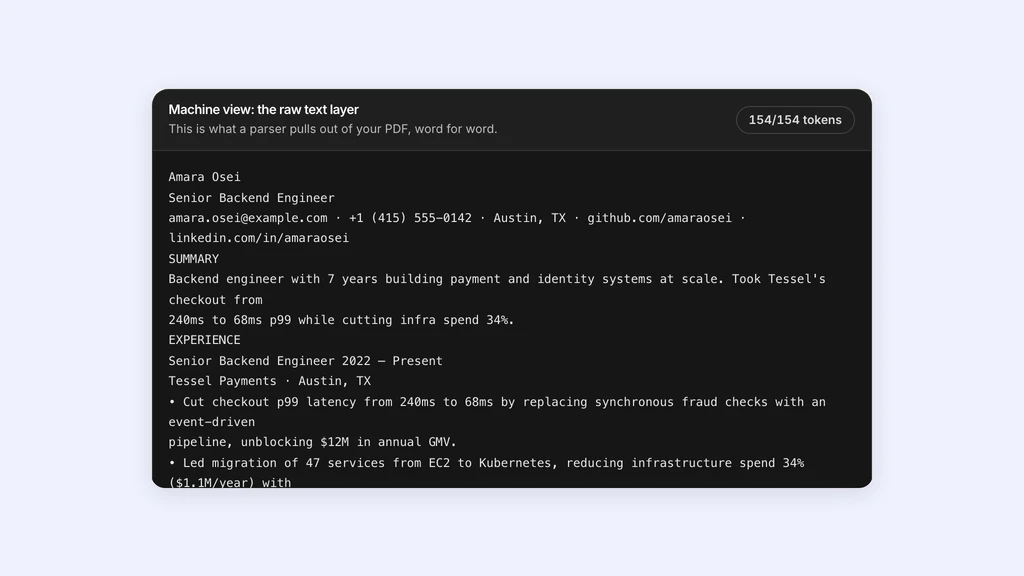
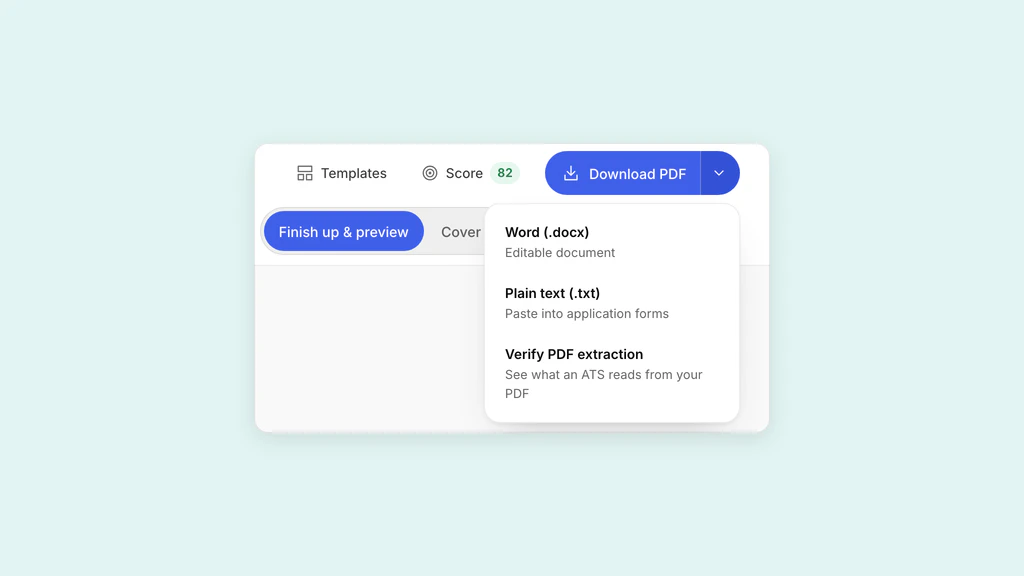
Finally, check that the exported document still preserves the number and its context. A metric separated from its role by a broken reading order is technically present but practically less useful.
Check your own bullets. Free, in your browser.
Sources and further reading
- Create a resume, CV, or cover letter, Harvard FAS Mignone Center for Career Success
- Résumé resources, Purdue Online Writing Lab
Put it into practice on a real resume.
Each example is a complete resume with role keywords and bullets that show proof. Open one in the Studio and make it yours, then download it with a free account.