In this guide
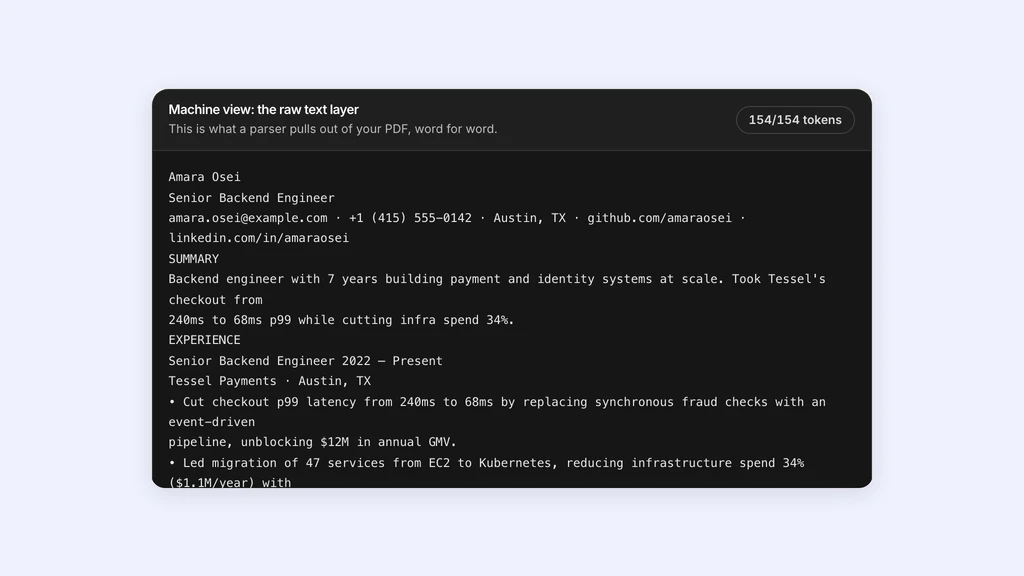
The most useful ATS check is not a mysterious score. It is the text your file gives back. If that recovered version keeps your name, headings, dates, roles, and bullets in a sensible order, you have evidence that the document has a usable text layer.
The short version
- Copy-and-paste is a quick first check, but a parser view is more revealing.
- Inspect missing text and reading order before worrying about keyword scores.
- A clean extraction is evidence of readability, not a promise of ranking or selection.
Your layout and your text layer are different things
A recruiter sees typography, spacing, alignment, and visual hierarchy. A parser begins with the document's encoded text and its positions. Those two views can disagree. A polished two-column resume may look perfectly ordered while its extracted text jumps from the left column to the right and back again.
PDF is a page-description format. Text can be stored as many positioned fragments rather than as one continuous document. Extraction software has to infer where lines and words belong. That inference is why a visual check alone cannot confirm how reusable the text will be.
Run a three-minute extraction test
Start with the exact file you plan to submit. Do not test the editable source and assume the exported PDF behaves the same way.
- Open the PDF, select all text, copy it, and paste it into a plain-text editor.
- Check that your name, email, phone number, job titles, employers, dates, and section headings are present.
- Read from top to bottom. Look for columns that interleave, bullets that detach from roles, and dates that appear far from the jobs they describe.
- Search the pasted text for a few distinctive words from the beginning, middle, and end of the resume.
- If the result is confusing, export a simpler version and repeat the same test.
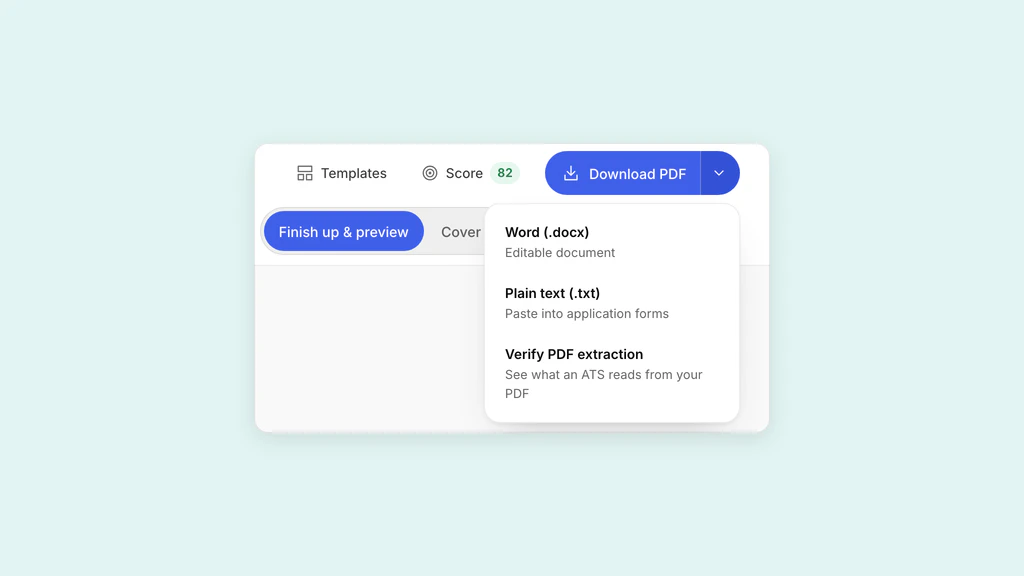
ATSPrep's X-Ray automates this round trip with PDF.js and shows the recovered text beside the document. It does not connect to a proprietary employer ATS.
Prioritize structural red flags
Missing contact details are more urgent than a weak keyword match because they indicate that core data may not have survived extraction. The same is true when job dates separate from job titles or when section headings disappear.
Treat strange punctuation and spacing as secondary unless they change meaning. Extractors often normalize line breaks, ligatures, and decorative bullets differently. The goal is not byte-for-byte visual fidelity; it is complete, intelligible content in a sensible sequence.
- Critical text is missing entirely.
- The reading order changes the meaning of a section.
- Characters in names, technologies, or email addresses are corrupted.
- A scanned resume returns no selectable text.
- Important information lives only in an image, header, or footer.
Fix the source, then test the export again
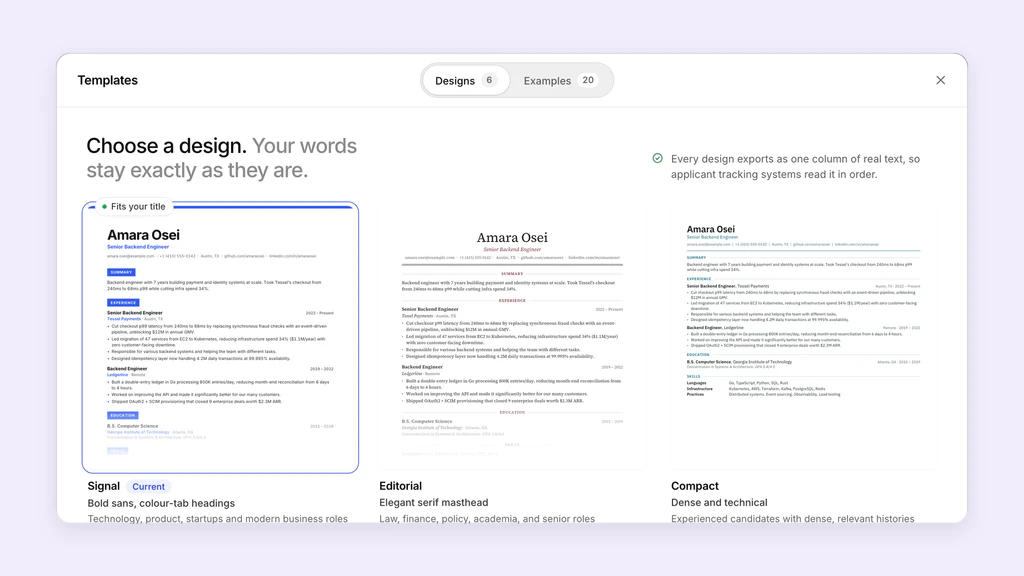
The safest repair is usually structural: use one main column, ordinary text, conventional section headings, and simple bullet lists. Keep essential contact information in the body of the document. Avoid rebuilding words from individually positioned letters or placing key facts inside decorative graphics.
After every meaningful formatting change, test the newly exported file. A resume is not proven readable because its template claims to be ATS-friendly. The output file is the artifact that matters.
Know what this test cannot tell you
Readable extraction does not guarantee that an employer will rank the resume highly. Hiring systems can apply configurable screening questions, recruiter filters, search terms, location rules, and workflow decisions that are invisible from the document itself.
Use extraction as a narrow, verifiable test: can software recover the information you wrote? Then evaluate relevance, evidence, and tailoring as separate questions.
Run an ATS resume scan on your own file. Free, in your browser.
Sources and further reading
- PDF.js, Mozilla
- Create and verify PDF accessibility, Adobe
- Supported file formats, Textkernel
Put it into practice on a real resume.
Each example is a complete resume with role keywords and bullets that show proof. Open one in the Studio and make it yours, then download it with a free account.