In this guide
Interview preparation is not memorizing perfect answers. It is building a small set of relevant examples, understanding the role, and practicing enough that you can listen and adapt instead of searching your memory under pressure.
The short version
- Prepare evidence stories around the role's real requirements.
- Practice concise answers aloud without scripting every sentence.
- Use your questions to evaluate the job as well as demonstrate preparation.
The checklist Tick it off as you prepare.
Read the posting again and group what it asks for, such as analysis, delivery or customer work. Mark what is essential.
Their official site, product and recent public news, and each interviewer's professional background if it is available. Context, not trivia.
A hard problem, a mistake you recovered from, a conflict, a collaboration, an improvement you started and a result you're proud of.
Record one round or ask someone to interview you. Listen for long setups and results that stay vague.
Two or three that help you decide, like what a strong first 90 days looks like or why the role is open.
Time, time zone, place or link, and names. For video, test your camera, microphone and connection, and keep a phone number handy.
That's your prep done. Good luck in there.
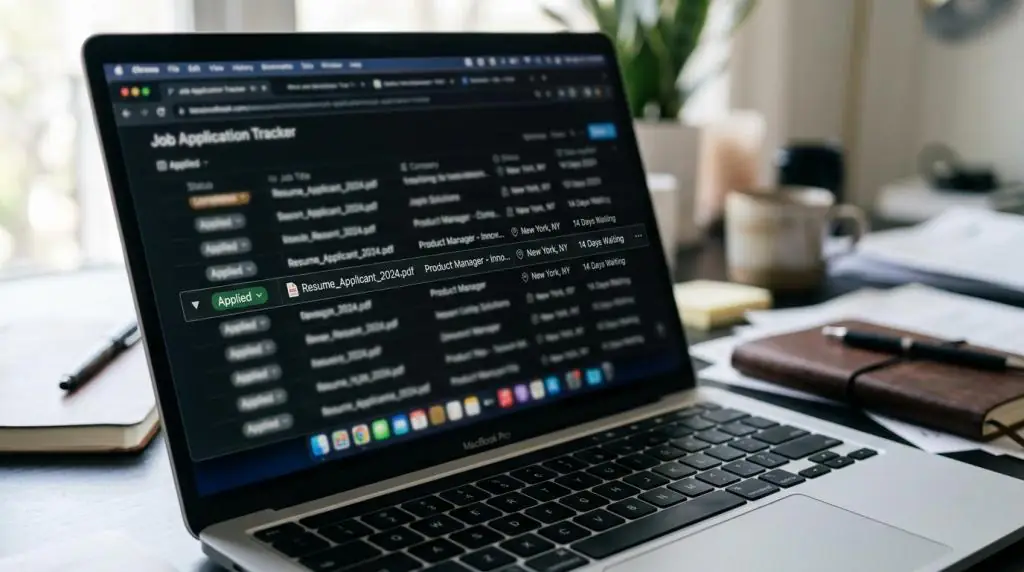
One more before the day: answer a question about your own resume, typed first, then out loud. Straight after the interview, write down what they asked, send a short thank-you and log it in your tracker so the follow-up doesn't slip.
Several days before: research the work
Read the job description again and group its requirements into themes such as customer communication, analysis, delivery, leadership, or technical depth. Note which parts are essential and which are preferences.
Review the employer's official website, product or service, recent public updates, and the interviewer's professional background when it is available. The goal is context, not collecting trivia to recite.
Choose six flexible evidence stories
Prepare examples that can answer more than one question. Useful themes include a difficult problem, a mistake and recovery, a conflict, a successful collaboration, an improvement you initiated, and a result you are proud of.
Structure each example with the situation, the specific task or responsibility, the actions you personally took, and the result or lesson. Spend most of the answer on your actions rather than the background.
- What was difficult or important about the situation?
- What decision or contribution was specifically yours?
- What changed, and how do you know?
- What would you repeat or do differently now?
Practice aloud, not only in your head
Silent preparation can create the illusion that an answer is ready. Saying it aloud reveals where the setup is too long, the result is vague, or the point gets lost.
Record one practice round or ask a trusted person to interview you. Aim for a clear opening sentence and a focused example rather than a word-for-word script.
If an answer sounds memorized, reduce it to three prompts: the problem, your actions, and the result. Keep the structure and let the wording stay natural.
Prepare questions that help you decide
Good questions reveal how the team works and what success requires. Avoid asking only questions that the public job page answers.
- What would a strong first 90 days look like in this role?
- What is the hardest problem the person in this role needs to solve?
- How does the team make decisions and share feedback?
- Why is the role open, and how has it changed?
- What distinguishes people who do well on this team?
The day before: remove logistical uncertainty
Confirm time, time zone, location, names, and interview format. For a video interview, test camera, microphone, connection, lighting, screen name, and the meeting link. Keep a phone number available in case the connection fails.
For an in-person interview, plan the route and arrival time. Bring the information you need, but avoid relying on notes so heavily that they interrupt the conversation.

During the interview: listen before answering
Pause briefly when you need to organize your answer. Ask for clarification if a question is broad or ambiguous. It is better to answer the intended question than to rush into a polished answer for a different one.
Be specific about your own contribution while giving teammates appropriate credit. If you do not know something, explain how you would investigate it rather than bluffing.
After the interview: capture and follow up
Soon after the conversation, write down the questions, your strongest answers, anything you would improve, and new information about the role. This turns every interview into preparation for the next one.
Send a concise thank-you message when appropriate. Reference a meaningful part of the discussion, restate your interest honestly, and provide any promised material. Then follow the timeline the interviewer gave before checking in.
Next: answer one question about your own resume. Free, in your browser.
- Mock interview practiceWith your resume in ATSPrep, Pip opens on one question about its strongest line. Type your answer first, see what it's missing, then say it out loud. Questions from the job post and follow-ups come after.
- Resume keyword scannerPaste the posting to see the skills it asks for most, so you know which stories to prepare.
Sources and further reading
- Prepare for an interview, Harvard FAS Mignone Center for Career Success
- Interview preparation, Yale Office of Career Strategy
- Job interview resources, Purdue Online Writing Lab
Put it into practice on a real resume.
Each example is a complete resume with role keywords and bullets that show proof. Open one in the Studio and make it yours, then download it with a free account.